Start with the problem, then frame the question
QuestionWhat problem should this research help us understand?
What the evidence says
A research question should grow from a clearly described problem and purpose.
Why it matters
Once the problem and purpose are clear, choose a framework that fits the question. PICO can structure an intervention-effect question; PCC can structure a scoping-review question about a population, concept, and context.
What to do
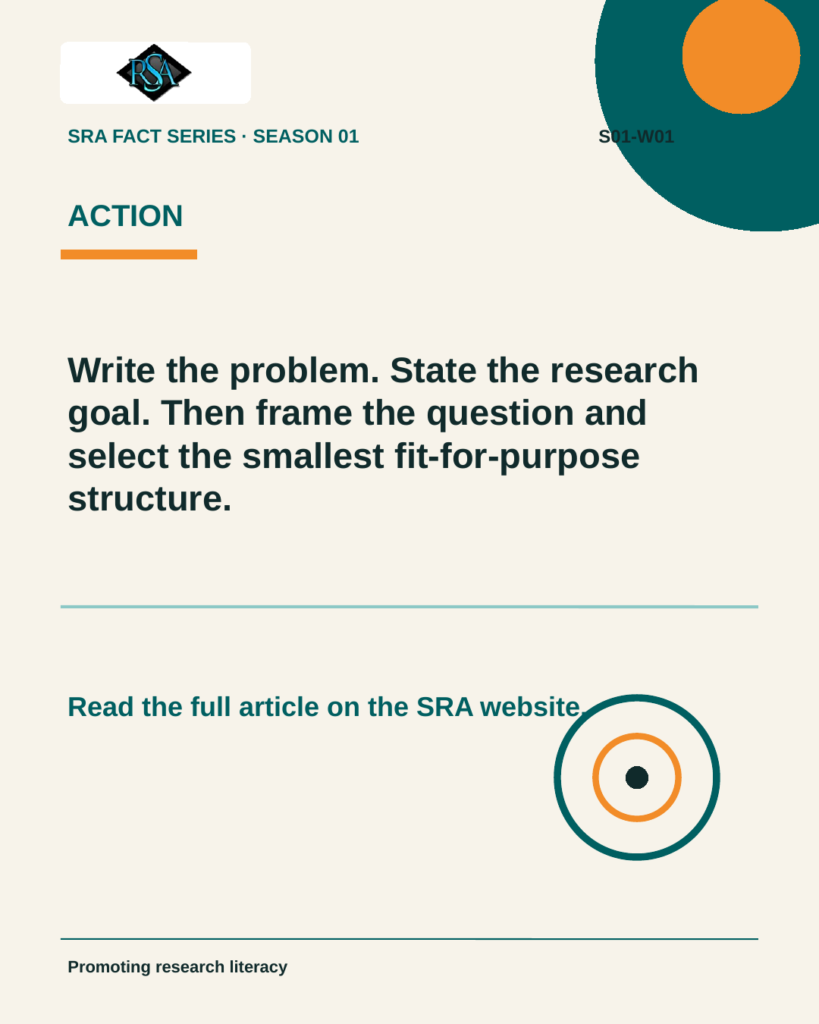
Write the problem. State the research goal. Then frame the question and select the smallest fit-for-purpose structure.
Explainer
Begin with the problem: what is happening, who is affected, and why does it matter? Clarify the purpose or decision the research should support. Then write the research question. For an intervention-effect review, population, intervention, comparator, and outcomes commonly shape the question and eligibility criteria. For a scoping review, population, concept, and context may fit better. The framework should fit the question. Record the problem, purpose, final question, framework, and rationale before searching.
The carousel
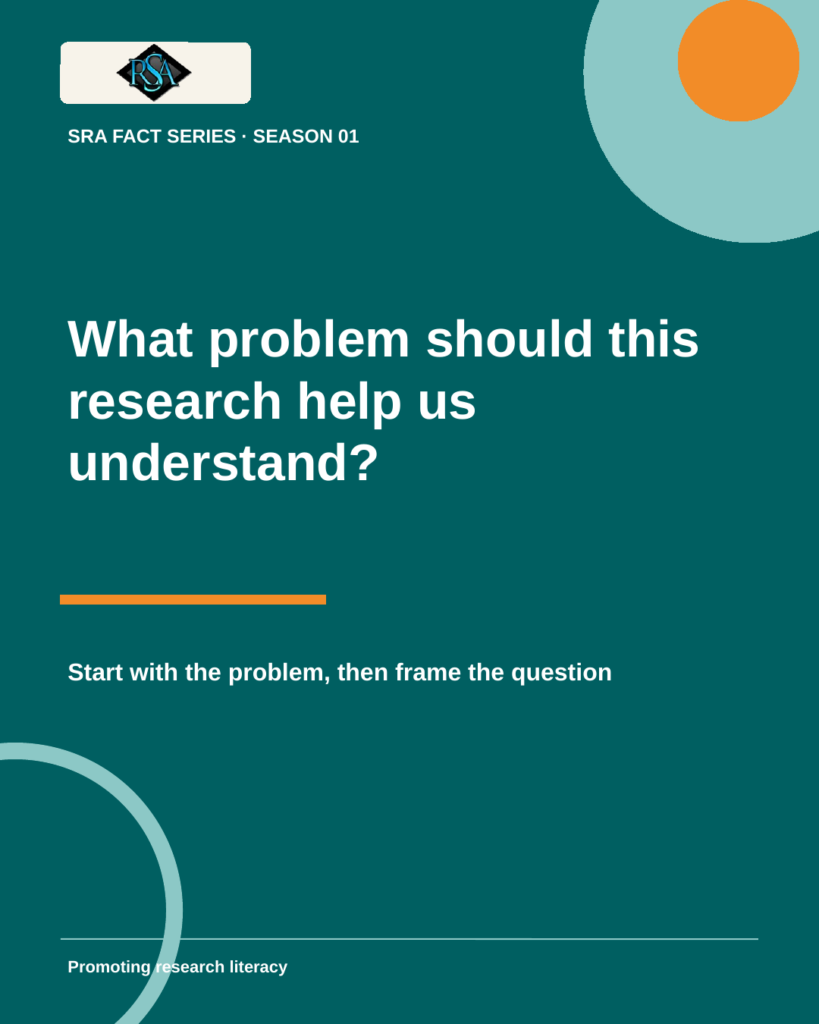
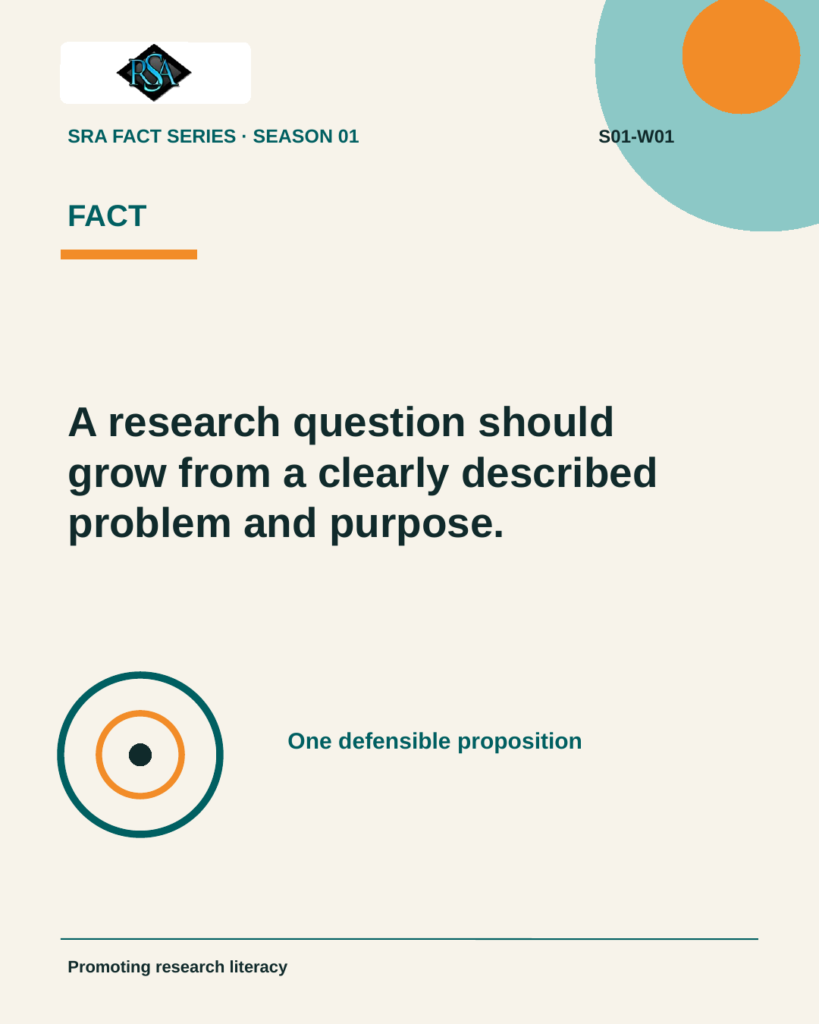
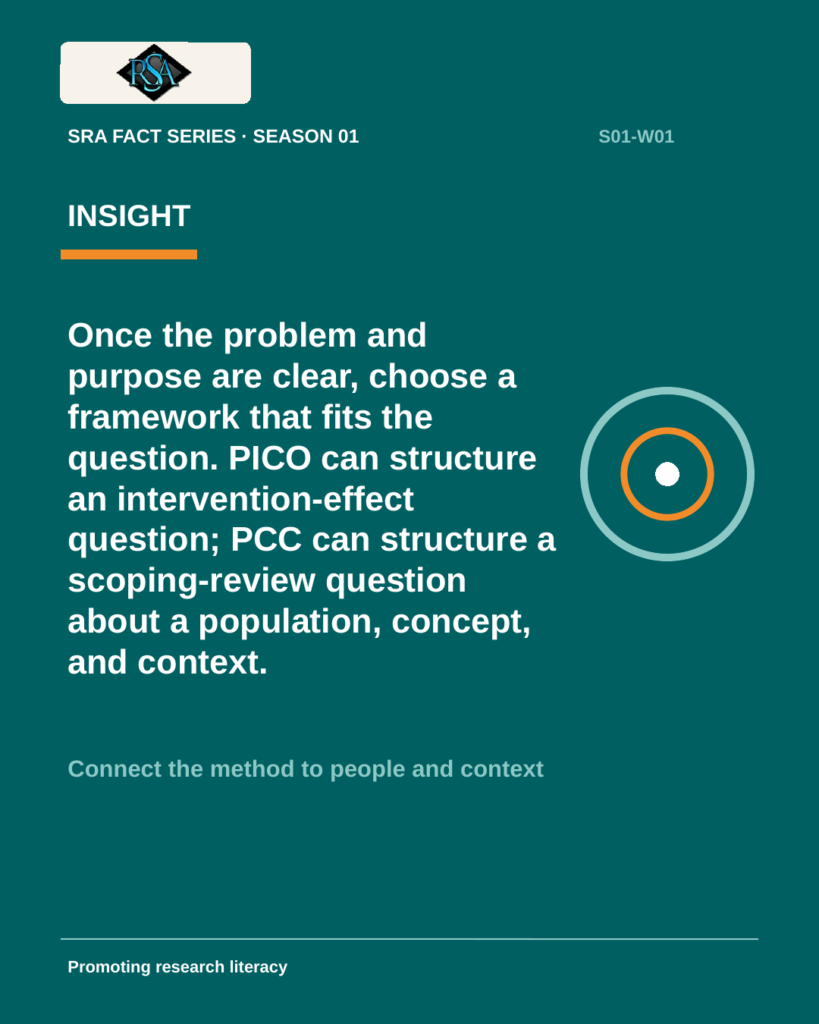
Week 01 four-page carousel showing a progression from the research problem to the purpose, the research question and a fit-for-purpose framework such as PICO or PCC.
Carousel transcript (plain text)
- Page 1, cover. Start with the problem, then frame the question. What problem should this research help us understand?
- Page 2, fact. A research question should grow from a clearly described problem and purpose.
- Page 3, insight. Once the problem and purpose are clear, choose a framework that fits the question. PICO can structure an intervention-effect question; PCC can structure a scoping-review question about a population, concept, and context.
- Page 4, action. Write the problem. State the research goal. Then frame the question and select the smallest fit-for-purpose structure.
Sources
- Cochrane Handbook, Chapter 3
- JBI Manual, scoping-review eligibility and question alignment, section 10.2.4
- ICMJE manuscript recommendations
Corrections
No corrections have been made to this article.
We correct errors openly. If a claim, figure or source here is wrong or out of date, report it through the contact form or email us with the source. We reply within two working days and record every correction on this page.